
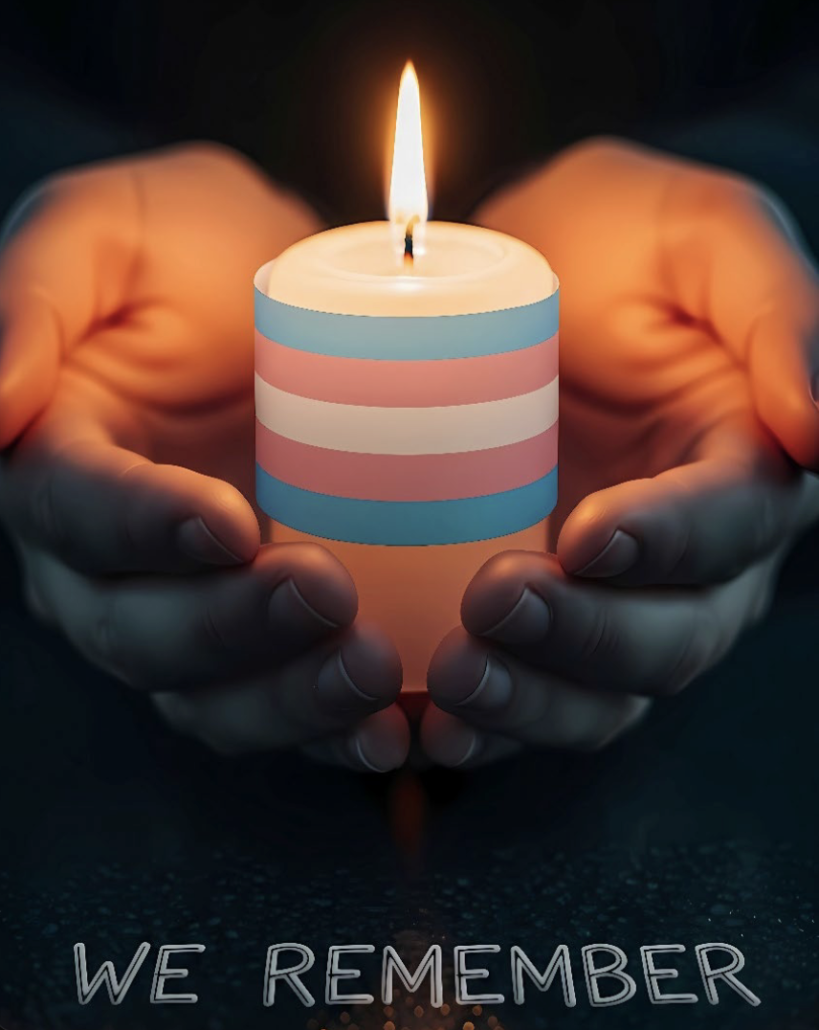
Trans Day of Remembrance: From Remembrance to Action
Each year on November 20, communities around the world observe Trans Day of Remembrance (TDOR), honoring transgender and nonbinary people whose lives have been lost to anti-transgender violence. It is a day to mourn, speak the names of those we have lost, and reflect on the work still needed to build a world where trans people can live safely and fully.
Trans Day of Remembrance began in 1999, when transgender advocates Gwendolyn Ann Smith, Nancy Nangeroni, and Jahaira DeAlto organized a vigil for Rita Hester, a Black transgender woman murdered in 1998. Her death, and the lack of attention it received, reflected a broader pattern of violence against trans people, especially Black trans women. Today, the observance remains an opportunity to honor those lost, recognize the disproportionate violence experienced by trans people, and recommit ourselves to changing the conditions that make such violence possible. As Smith has reflected in Them, the hope is for a world where memorials like these are no longer necessary. And, that future requires more than remembrance alone.
Why does this day matter to all of us?
You do not have to be transgender to hold space for Trans Day of Remembrance. For trans and nonbinary people, this day often brings grief, reflection, and connection. For cisgender people, it offers an opportunity to listen, learn, and consider their responsibility to the trans people in their lives and communities.
At the Unitarian Universalist Fellowship of Winston-Salem, our commitment to cultivating curious minds, compassionate hearts, and courageous actions calls us to put our values into practice. We can honor trans lives by challenging misinformation, using people’s names and pronouns, speaking up when we encounter transphobia, supporting trans-led organizations, and advocating for policies that protect trans people’s rights. We can also examine our own assumptions and listen to experiences beyond our own.
As Nova Bright-Williams reflects in a blog for The Trevor Project, remembrance and grief can coexist with hope for trans and nonbinary people who are living, growing, and imagining their futures today. Trans people deserve joy, belonging, safety, and the freedom to flourish, not just survival. Part of building that future means creating opportunities for genuine connection. Look for ways to build relationships with transgender and nonbinary people in your community, attend welcoming public events, and participate in spaces where people can share their experiences on their own terms. We don’t need to expect others to educate us; we can approach one another with curiosity, humility, and a willingness to listen.
Remembrance should not be limited to one day. It is a commitment we carry into our families, workplaces, congregations, and communities. This Trans Day of Remembrance, and every day, may we honor those we have lost, support those who are here, and work together toward a world where every person can live with dignity, safety, and the freedom to be themselves.
A Question to Carry With You: What is one thing you can learn, one conversation you can have, or one action you can take to help make the spaces you inhabit safer and more affirming for trans people?
Continue Learning
Local Spotlight:
- Peacework Medical: A local resource offering opportunities for connection, education, and support for transgender and nonbinary people and those who care about them. Its SOFFA (Significant Others, Friends, Family, and Allies) Group meets monthly and welcomes people looking to learn, connect, and build community. Visit Peacework Medical’s website for meeting information and additional resources.
Other Resources:
- The Trevor Project: Resource Center
- Equality North Carolina: Resource Hub
- Campaign for Southern Equality: Trans in the South
- PFLAG: Transgender Resources
- Advocates for Trans Equality: Official Website


